Copa Libertadores All-Time Top Scorers: The Complete List (2026)
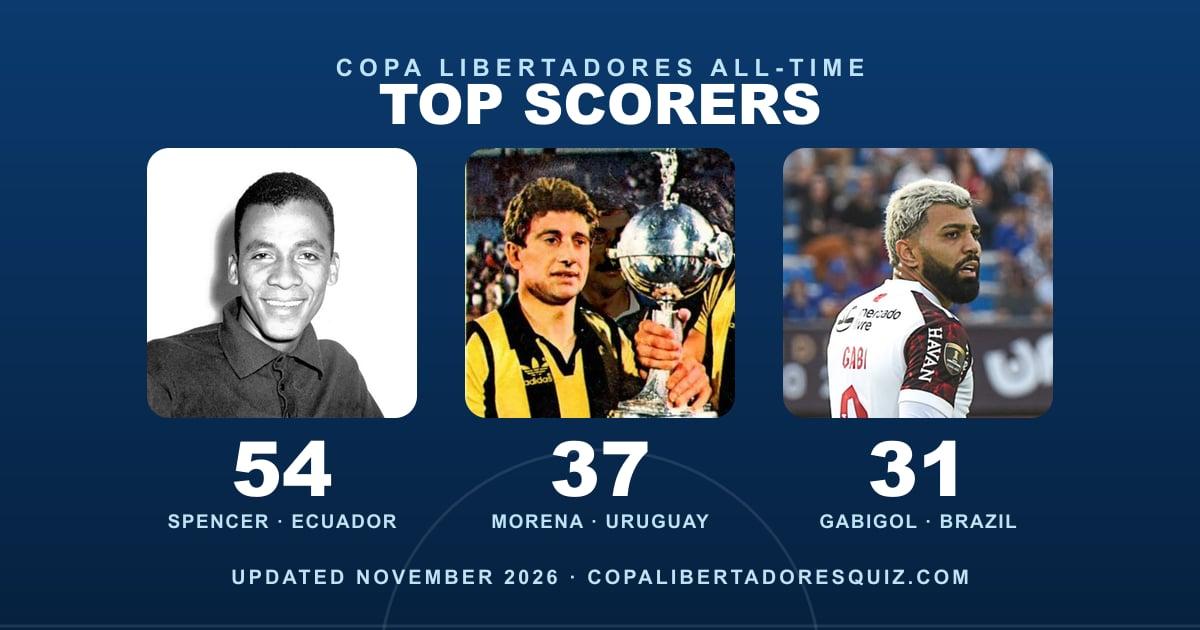
Alberto Spencer has been the Copa Libertadores's all-time top scorer for more than half a century, and in 2026 the gap to the rest is still huge: 54 goals, 17 more than Fernando Morena and 23 more than the best of today's players. Below you will find the full top-8 ranking, the story behind every name, the recent Golden Boot winners, the records that still stand and a link to the trivia quiz of each scorer so you can test what you just learned.
The all-time list: top 8 at a glance
1. Alberto Spencer (Ecuador) — 54 goals · Peñarol (48), Barcelona SC (6)
2. Fernando Morena (Uruguay) — 37 goals · Peñarol
3. Pedro Rocha (Uruguay) — 37 goals (36 in some counts) · Peñarol (26), São Paulo (10), Palmeiras (1)
4. Daniel Onega (Argentina) — 31 goals · River Plate
5. Gabigol (Brazil) — 31 goals · Flamengo (30), Santos (1)
6. Miguel Borja (Colombia) — 31 goals · Atlético Nacional, Palmeiras, Junior, River Plate
7. Julio César Morales (Uruguay) — 30 goals · Nacional
8. Lucas Pratto (Argentina) — 30 goals · River Plate, Atlético Mineiro, Vélez, Universidad Católica
Some lists also place Luizão, Juan Carlos Sarnari and Antony de Ávila on 29 goals each. Sources disagree on a goal or two in the middle of the table, so the order of the players tied on the same total can differ from one list to another; see the note at the end of this article.
1. Alberto Spencer: 54 goals and a record from the 1960s
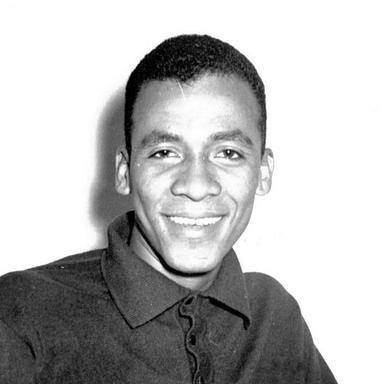
Spencer was born in Ancón, Ecuador, in 1937 and moved to Peñarol in 1960. "Cabeza Mágica" scored 48 of his 54 Libertadores goals in the yellow and black shirt and won three titles with the club (1960, 1961 and 1966), then added six more with Barcelona Sporting Club in Guayaquil.
His 54 goals, scored between 1960 and 1972, are 17 more than the player in second place and 23 more than the best of the active players. In more than five decades nobody has gotten close.
2. Fernando Morena: three Golden Boots and the 1982 title
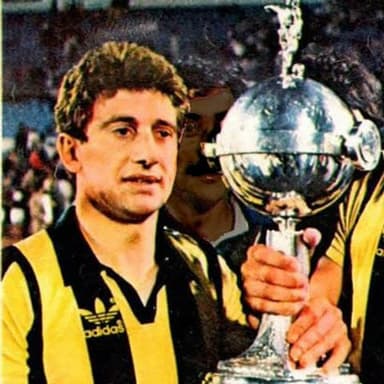
Morena, "El Potrillo", was the Libertadores top scorer three times (1974, 1975 and 1982) and scored all 37 of his goals for Peñarol. In 1982 he decided the final against Cobreloa in Santiago with the only goal of the deciding match, in the 89th minute, and Peñarol went on to win the Intercontinental Cup.
He also holds one of Uruguay's great domestic records, with 36 goals in the 1978 league season, and played for Valencia, Rayo Vallecano and Boca Juniors.
3. Pedro Rocha: the midfielder in the top three
Rocha, "El Verdugo", is the only midfielder among the leading scorers. He won three Libertadores with Peñarol (1960, 1961 and 1966) and two Intercontinental Cups, then moved to São Paulo in 1970, where he scored 10 more Libertadores goals, and finished with one for Palmeiras.
The goal count is the one number in this ranking that changes with the source: 37 on Wikipedia's table, 36 on others. Either way, he sits third. He also played four World Cups (1962, 1966, 1970 and 1974) and was named best player of the 1967 Copa América.
4. Daniel Onega: 17 goals in a single edition
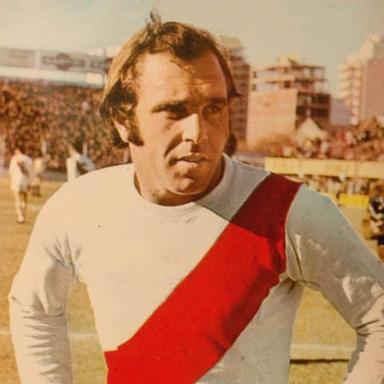
"El Fantasma" holds one of the Libertadores's oldest records: 17 goals in the 1966 edition, which still stands. His goals took River Plate to the final, where Peñarol won the title.
In total he scored 31 goals in the competition, in only 47 matches, a rate of 0.66 goals per game that is among the best of the leaders. He scored 116 goals in 240 matches for River and also played for Racing, Córdoba in Spain and Millonarios.
5. Gabigol: the modern face of the ranking
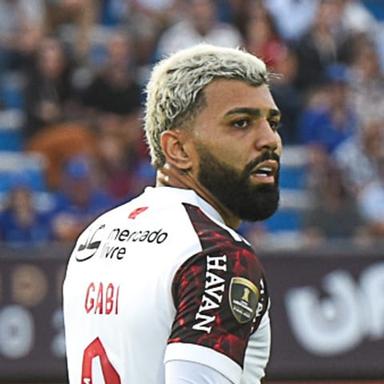
Gabigol is the leading scorer of the modern Libertadores. He was the competition's top scorer in 2019 (9 goals) and 2021 (11), scored two late goals in the 2019 final against River Plate in Lima, and the only goal of the 2022 final against Athletico Paranaense in Guayaquil. Flamengo won both titles.
He has 31 goals, 30 of them for Flamengo, and sits among the five all-time top scorers. The total can change as he keeps playing.
6. Borja, Morales and Pratto: the next three
Miguel Borja (Colombia) has 31 goals for Atlético Nacional (5), Palmeiras (11), Junior (7) and River Plate (8), in 53 matches.
Julio César Morales (Uruguay) scored 30 goals for Nacional in 76 matches.
Lucas Pratto (Argentina) has 30 goals in 93 matches for River Plate, Atlético Mineiro, Vélez and Universidad Católica, and is the player with the most games among the leaders.
Recent Golden Boot winners
2019 — Gabigol (Flamengo), 9 goals
2021 — Gabigol (Flamengo), 11
2022 — Pedro (Flamengo), 12
2023 — Germán Cano (Fluminense), 13
2024 — Júnior Santos (Botafogo), 10
Records every scorer is chasing
Most goals in the competition: Alberto Spencer, 54.
Most goals in one edition: Daniel Onega, 17 in 1966.
Most goals in one edition in recent years: Germán Cano, 13 in 2023.
Frequently asked questions
Q: Who is the Copa Libertadores all-time top scorer?
Alberto Spencer, with 54 goals scored between 1960 and 1972 for Peñarol and Barcelona SC. He is 17 goals ahead of the second-placed player.
Q: Who is second?
Fernando Morena, with 37 goals for Peñarol. Pedro Rocha has 37 on Wikipedia's table and 36 on some others.
Q: Which active players have the most Libertadores goals?
Gabigol and Miguel Borja have 31 each and Lucas Pratto has 30, according to the table before the end of the 2026 edition. Spencer's record is 23 goals away.
Q: What is the record for goals in a single Libertadores?
Daniel Onega scored 17 in the 1966 edition for River Plate, and the record still stands.
A note on the numbers
Tallies follow Wikipedia's all-time table, completed with 90min's list, and reflect the competition up to the end of the 2025 edition plus whatever the 2026 edition has added so far; the 2026 final, between Palmeiras and Estudiantes, is on November 28 in Montevideo. Sources differ by a goal or two for some players (Pedro Rocha, for example, has 37 or 36) and by the number of matches played, probably because of different counting criteria. This article will be updated after the final.